Before You Go One-Arm: The 2 Things You Actually Need
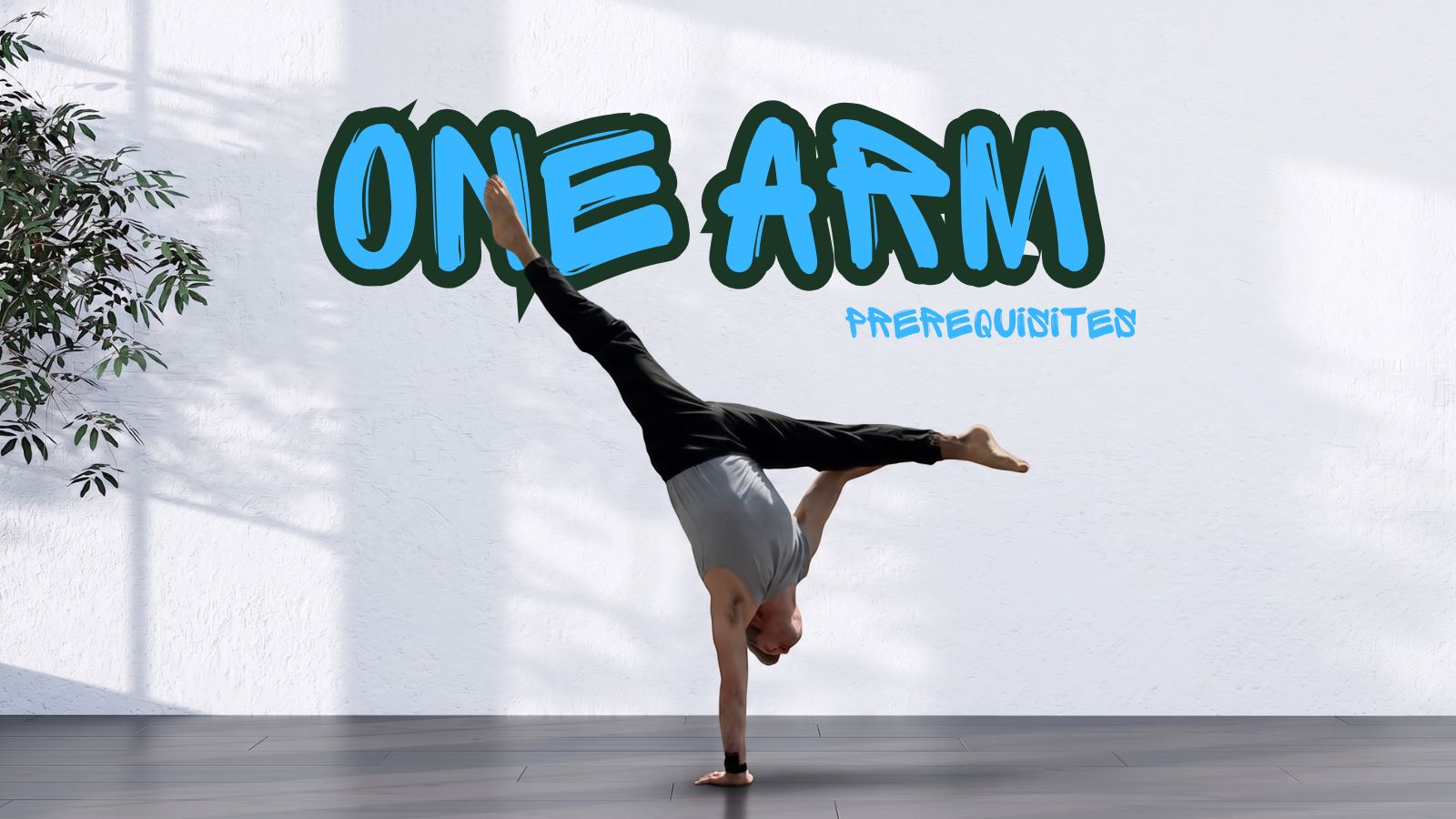
Most people start one-arm work too early. Here's what your two-arm handstand needs to look like before you take that first step sideways.
One-arm handstand work is exciting. It's also where a lot of people stall out completely, or worse, hurt themselves.
Usually the reason is the same: they started too early.
Before you shift weight onto one arm, your two-arm handstand needs to reach a certain level. Not perfect — but proficient enough that the two-arm feels like a safe place to return to, not a battle you're still fighting. If you're not there yet, one-arm training won't just be frustrating. It's likely to stall your progress and increase your injury risk.
Here are the two minimum prerequisites I'd recommend before starting one-arm work.
1. A High Success Rate on Your Mounts
I'm talking about kick-ups (what I call the "Step In"), tuck-ups, straddle-ups. And I mean a high rate: at least 80%.
That number matters because it tells you several things at once. It means you can work across different mount types. It means you control how much energy you spend going up — you know how hard to push and how to stop the movement once you arrive. And with different mount variations, you've developed an understanding of how to move different parts of the body, pull them back to a good line, and use counterweight — usually legs against hips.
If your mounts are inconsistent, every one-arm attempt starts from an unreliable position. You can't learn to balance on one arm from a position you can't reliably reach in the first place.
2. A Consistent One-Minute Freestanding Handstand
One minute is the target. If you're holding 40 seconds with genuinely clean technique and real control, that might be enough. But the goal isn't the number — it's what the number indicates.
A longer hold means you're dealing with more and more small balance challenges over time — and finding your way through them. You drift slightly, you correct, you stay. That's the skill. Not just surviving the handstand, but actively solving it while you're in it: finding the micro-adjustment, making it more precise, settling back in.
There's also a mental dimension to this. When a longer hold starts getting harder — and it will — the question is what you do. Do you bail, or do you find a way? A minute-long hold trains you to stay with difficulty, to problem-solve under pressure rather than come down. That quality carries directly into one-arm work, where the challenges are significantly higher.
What you need is enough time in the air to actually do something while you're up there. Short, inconsistent holds don't give you that runway.
Why This Matters More Than People Think
The better your two-arm handstand, the easier and safer one-arm training becomes. This isn't about being conservative — it's about being efficient. Trying to learn one-arm from a shaky two-arm base means fighting two problems at once. You'll spend more time managing the foundation than actually developing the skill.
Build the right technique and the right resistance in your two-arm first. When it feels like home — a place you go to recover, not a place you're still trying to survive — you're ready.
One More Thing
We're building something that will help you map exactly where you are in this progression and what to focus on next. More on that soon — stay tuned.
Yuval Oz
Hand balancer and handstand coach. Teaching people to get upside down - and stay there - since 2008.
Stay in the loop
Get new posts and updates
No noise. Just new articles, upcoming workshops, and things worth knowing.